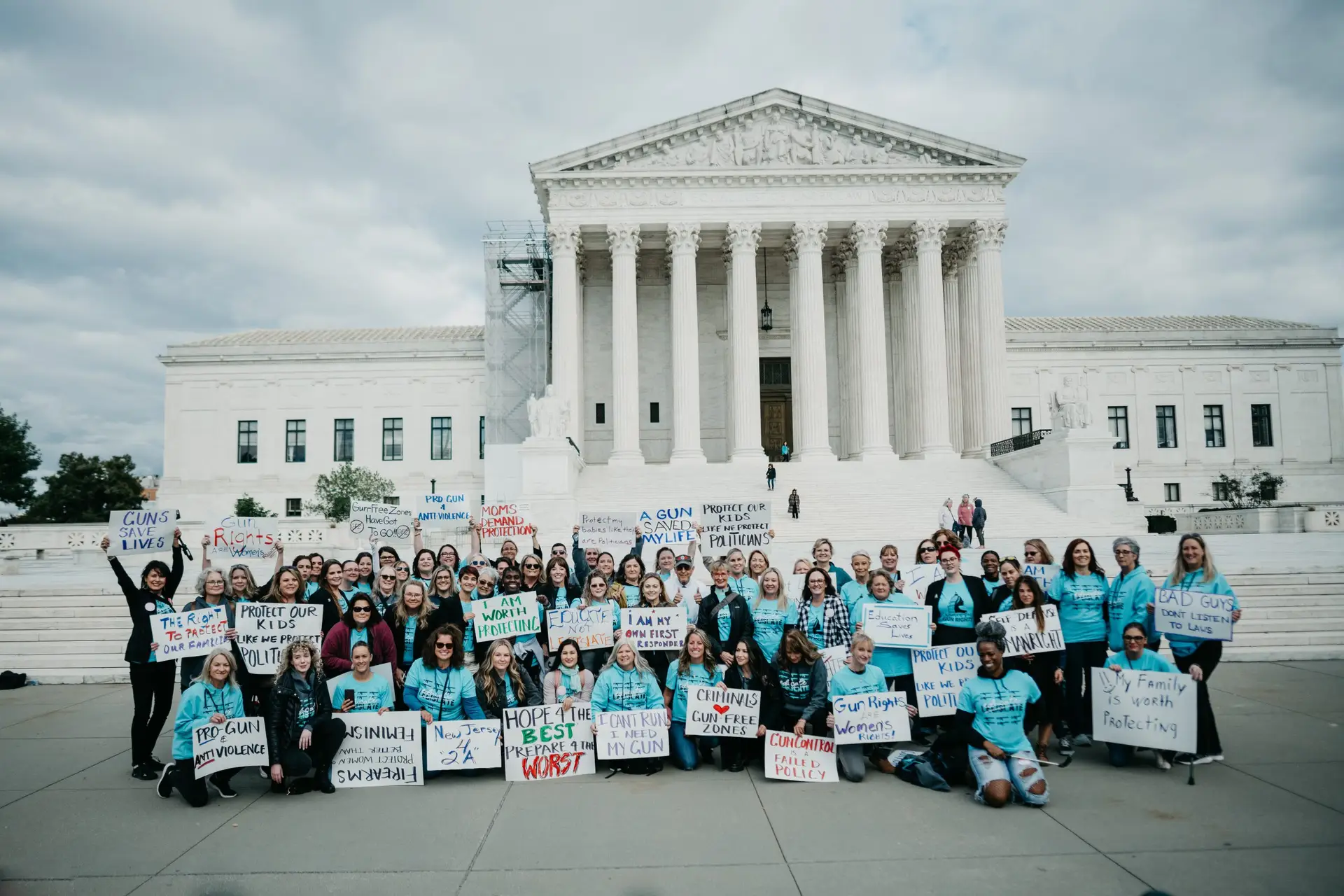
Second Amendment Victories
The U.S. Supreme Court issued two significant Second Amendment decisions this week that strengthen constitutional protections for law-abiding Americans.
1. Federal Drug User Firearm Prohibition
What the Court ruled
In a unanimous decision, the Supreme Court narrowed the application of the federal law (18 U.S.C. § 922(g)(3)) that prohibits firearm possession by “unlawful users” of controlled substances.
The Court rejected an interpretation that would automatically strip millions of Americans from their Second Amendment rights simply because they had used an illegal drug and instead emphasized that modern firearm restrictions must fit within the Nation’s historical tradition of firearm regulation.
What this means for everyday citizens
This ruling does not legalize firearm possession for all drug users.
Instead, it means:
- The government cannot automatically rely on a broad prohibition without demonstrating that it fits within the historical limits recognized under the Second Amendment.
- The decision is particularly significant for states where marijuana is legal under state law but remains illegal under federal law.
Practical effects
The ruling will likely:
- Require lower courts to reconsider many prosecutions under the federal drug-user prohibition.
- Make it more difficult for the government to broadly disarm people based solely on past or occasional drug use.
2. Wolford v. Lopez – SCOTUS Rejects Hawaii’s “Vampire Law”
What the Court ruled
In a 6-3 decision, the Supreme Court struck down a Hawaii law that made it illegal for licensed concealed carry permit holders to carry a firearm onto virtually any private property open to the public—such as restaurants, grocery stores, retail shops, hotels, and other businesses—unless the property owner had given express permission.
Gun rights advocates nicknamed this the “Vampire Law” because it treated lawful gun owners much like the folklore surrounding vampires—they can’t enter private property unless they’re invited in.
The Supreme Court rejected that approach and stated that when a business opens its doors to the public, customers generally have implied permission to enter unless the owner says otherwise. Hawaii attempted to create a special rule that only applied to lawful concealed carriers.
What this means for everyday citizens
The ruling does not force businesses to allow firearms. Private property owners remain free to prohibit firearms on their property. Instead, the Court changed who decides the default rule. This restores the traditional balance between private property rights and Second Amendment rights. The government cannot declare nearly every private business a gun-free zone simply by making “no carry” the default.
Practical effects
For law-abiding concealed carry permit holders:
- You are no longer presumed to be breaking the law simply by entering a business that has not posted a firearms prohibition.
- Business owners continue to have the right to prohibit firearms on their own property if they choose.
- The decision casts serious constitutional doubt on similar “Vampire Laws” enacted in states such as New York, California, New Jersey, and Maryland following the Court’s decision in Bruen.
A simple way to explain the decision is:
The Supreme Court held that constitutional rights don’t require an invitation. If a business is open to the public, licensed concealed carriers are presumed to have the same permission to enter as everyone else—unless the property owner says otherwise. The government cannot require citizens to get a special invitation just to exercise a constitutional right.
The Bigger Picture
Both decisions reinforce the Supreme Court’s commitment to applying the constitutional framework established in New York State Rifle & Pistol Association v. Bruen.
That framework requires governments to justify modern gun restrictions by demonstrating they are consistent with America’s historical tradition of firearm regulation—not simply by arguing that a law promotes public safety.
The practical takeaway for law-abiding gun owners is that the Court continues to scrutinize broad firearm restrictions that burden ordinary citizens exercising their constitutional rights. At the same time, the decisions leave intact the authority of private property owners to set rules for their own property and do not eliminate all firearm prohibitions.